emotional intelligence, interview, politics, self improvement, Uncategorized

How to become a great public speaker

With so much rubbish on the freeview channels, I have taken to watching the recent party conferences. I’d much rather be entertained by a great speaker than bore myself watching celebrity game shows. And aren’t there too many of those? Where gameshows and Eastenders’ become the ‘news’. Even though it’s all pretend. Talk about dumbing down! I’ve shown Farage; Polanski and Burnham in the picture because they are the political leaders I most enjoy watching. I don’t have to agree with them to like hearing them speak.

When it comes to presentation, party politics, for me, has never been better. A move away from the complacency of the past. New ideas. New faces. Though for me, some of Andy Burnham’s shine is beginning to wear off. It’s one thing to talk about growth in the economy. But he doesn’t seem to be doing anything to make it happen. Instead there is hesitancy even over the Heathrow Airport expansion, not to mention the Jackdaw and Rosebank oil and gasfields. all of which are supported by the main unions, including the TUC, because of the jobs they will create. When I attended a recent Back Heathrow Airport Event at Hounslow’s Gymkhana Club. I was impressed by the turnout from the Unite and GMB unions. Andy – please listen to them – instead of wittering about Britain rejoining the EU. Kemi Badenoch is for me still the unknown quantity and I look forward to seeing her speak at the forthcoming Conservative party conference. But her promise has for me being marred by her recent support for Joshua Bonehill-Paine becoming a Conservative councillor. Why? What was that all about? Bonehill-Paine might be a reformed character but none of us can erase our past. The damage has been done. But I’ll listen to what Kemi has to say. I hope that she can come up with some real ideas. Gimmicks like abolishing inheritance tax just don’t cut it for me. And wasn’t her predecessor, David Cameron, all about gimmicks? Like ‘localism’. And as leader of the opposition, she has to do more than just ‘oppose’. And as for Ed Davey? Well? What can I say? Falling out of boats is never going to win my vote. I need to know what he stands for. So what is it that makes the three-party leaders shown in the picture so engaging? And what can we learn from them? Here are some suggestions:

  • Be genuinely passionate about your subject. If you are passionate, you don’t have to worry about what you are going to say. The words will just come. A passionate speaker sells emotion.
  • Have you noticed that none of these speakers ever use notes.? Burnham doesn’t even stand behing a rostrum. Glancing at notes means that you break eye contact with your audience. And it is the eye contact which creates the power in a good speech.
  • Structure your speech. Not just a beginning, middle and an end. Remember the salesmans’ acronym AIDA. Say something to get the audience attention. Summarize the theme. Back it up with facts and argument. And finally the call to action.
  • Don’t ramble. You are not a lay preacher. Know what you want to say. Say it. Summarise it. Sit down. Learn to read your audience. When you see them fidgeting. Whispering to each other. Looking up their phones. Have the courtesy to shut up. Don’t wait for people to start walking out.
  • Be heard. You don’t need to tap a microphone if you can throw your voice to the end of the room.
  • Actively look for opportunities to speak. Maybe through your work or special interests. Or join a speakers club.
  • Buy a copy of Dale Carnegie’s ‘The quick and easy guide to Effective Speaking’ [my call to action]
career, interview, job; career; money; raise; pay; increase, jobs, Law, Uncategorized

Your First Job: Key Tips for Young Job Seekers

With more than a million young people in the UK not in employment, education or training (NEETS), getting your first paid job has never been more difficult. But hasn’t getting your first permanent paid job always been difficult? When you have nothing to offer but a few paper qualifications and your enthusiasm? Yes – but it’s never been as difficult is it is today. We start by explaining the reasons for this sad state of affairs before looking at what you can do about it. Here are the reasons:

  • The modern trend of referring to our 16 and 17-year-olds as ‘children’ to be mollycoddled. Mixing them in with 11-year-olds. Banning under 16s from social media instead of making them streetwise. And then wondering why they act stupid. I was 14 years old when I bought my first packet of Players No 6 from a cigarette machine in a fish and chip shop. Just to look ‘big’. But it never did me any harm and I gave up smoking 5 years later. In other cultures it is different. Elsewhere in the world young people are not held back. They are encouraged to ‘grow up’, take on the family responsibilities and contribute. Maybe we can learn something.
  • Language illiteracy. The fact that learning foreign languages is not prioritized in the UK. Instead we expect everyone else in the world to accommodate us. The one thing I remember about learning French at secondary school was that I never actually met anyone who was French. In fact you were more likely to be taught by the woodwork teacher. Has anything improved since? I don’t think so.
  • The regulating away of the Saturday job. Forget paper rounds. No one gets their papers delivered anymore. It was the Saturday job which for many young people provided the gateway to paid employment. Unpaid work experience or internship is no substitute for a wage packet. The fact is that there are now many administrative hurdles for any business thinking about taking on a Saturday worker. If a person is under the age of 16, application has to be made to the local authority for a child employment permit, otherwise employers and public liability insurance might be invalidated. Young people require supervision at the till if they are serving restricted items like alcohol or cigarettes or lottery tickets. For most employers it is just not worth a hassle. Recruiting a Saturday person now requires more than just a 20-minute interview and a gut feeling
  • When you apply for your first ‘proper’ job, you are asking a prospective employer to take a ‘punt’. Because you have nothing to offer but a few paper qualifications and your enthusiasm. But the stakes for a prospective employer are much higher when everyone has day-one ‘rights’.

So what can you do to improve your prospects of getting that first job? Here are some tips:

  • To apply for a job vacancy, you first have to know about it. So you register with agencies. Look around to see what his advertised. Speak to people. But don’t get scammed, If someone asked you to send payment up front or to provide your bank details, you know it is a scam. Or if it is just too good to be true? Like becoming a crypto millionaire.
  • Don’t use AI to write your CV. Chances are it will filch from someone else’s CV. And you want a prospective employer to know about you and not your computer. So it’s got to be original and interesting and packed with examples which only you can talk about. Even using AI to check your spelling or grammar can be dangerous as it will default to American English. So maybe best to refer to an old-fashioned dictionary.
  • The likability factor. No one is going to offer you a job unless they like you. And first impressions count. So you throw away that hoodie and cover up those tattoos. Take a genuine interest in the job which is offered and find out as much as you can about it in advance so that you have something to talk about if you are called for interview. Buy a copy of Dale Carnegie’s ‘How to Win Friends and Influence People’ and read it. Likability can be learned. It’s the basic stuff like taking an interest in people and the world around you; taking the trouble to remember somebody’s name; treating everyone you deal with as ‘important’, even if they are sweeping the streets. Not breaking eye contact to look at your mobile phone.
  • Be presentable. The good news is that it is not expensive to look smart. So go to Primark or order off Amazon. Nobody is going to look at the label.
  • Think about learning another language. Because it will give you work-mobility. If you can speak some of the biggest languages, you can work anywhere in the world. Yes I know it’s difficult. Even though there are excellent programs like Duolingo. Problem is, it’s a solo activity. Everything is online. When you really need someone to practice with.
  • Polish up your communication skills both written and face to face. Remember that most of our communication is non-verbal. Hence the importance of eye contact. Don’t – don’t – don’t look at your phone when you are being interviewed. Switch it off and keep it in your pocket. Even if you don’t like football or cricket, at least listen to the sports news, because you need it for the ‘small talk’. Talking about sport is not going to upset anyone. One of the best ways to improve communication skills is practice. So join your local Toastmasters Club.

In the final part of this post, I’m going to introduce you to the world’s most exciting profession. Here it is

Uncategorized

The Real Pirates Behind the Films

Even as a child, I would not have read Harry Potter. It’s just that I was not into wizards and magic spells. But give me Pirates! And that’s something else! It’s also why I watched all of the Pirates of the Caribbean films over the Christmas and New Year period. But did you know that each of those films had their roots in fact? I’ll prove it to you.

As a child I would lay in bed reading Edward Dingle’s ‘Sinbad’s Book of Pirates’, which was written in 1936 and had been given to me as a hand me down.

I’ve never been a pirate and wouldn’t be qualified to write a pirate book. Dingle was qualified because before becoming an author he had spent 22 years at sea and had survived five shipwrecks. In 1893, Dingle joined the salvage schooner Black Pearl to look for sunken treasure. They found the sunken wreck and strong box but we’re unable to move it. Strong gales then blew the ship away. A return voyage was wrecked near St Paul’s Island Australia. The crew survived but the Black Pearl was lost. They survived by eating rabbit, goat and fish before they were rescued. Eventually they did find treasure in another shipwreck. Does his story sound familiar?

Was it a coincidence that the name Black Pearl was used in Walt Disney’s first 2003 ‘Pirates of the Caribbean: the Curse of the Black Pearl’?

For me, the best pirate film was the 2011 ‘On Stranger Tides’ which again featured real historical characters and ships. The lead character in that film was Edward Teach, the famous Blackbeard and his ship, Queen Ann’s Revenge. Teach lived from 1680 to 1718 and operated around the West Indies and Britain’s then North American colonies.The Blackbeard name derived from his awesome appearance.So what about the mermaids?

Did mermaids actually exist? All we know, is that throughout most of human history, sailors believed in them. Mermaids were unlucky Omen. So what is it that I’m trying to say? That everything you write has to have an element of authenticity, Even if it’s fantasy fiction. It’s all about the research. About getting it right.

Postscript: in a moment of madness I went on to the Amazon site and ordered a used copy of Dingle’s 1936 book. It was as I’d remembered it. Almost word for word. And guess what? It is the World’s only surviving copy

Uncategorized

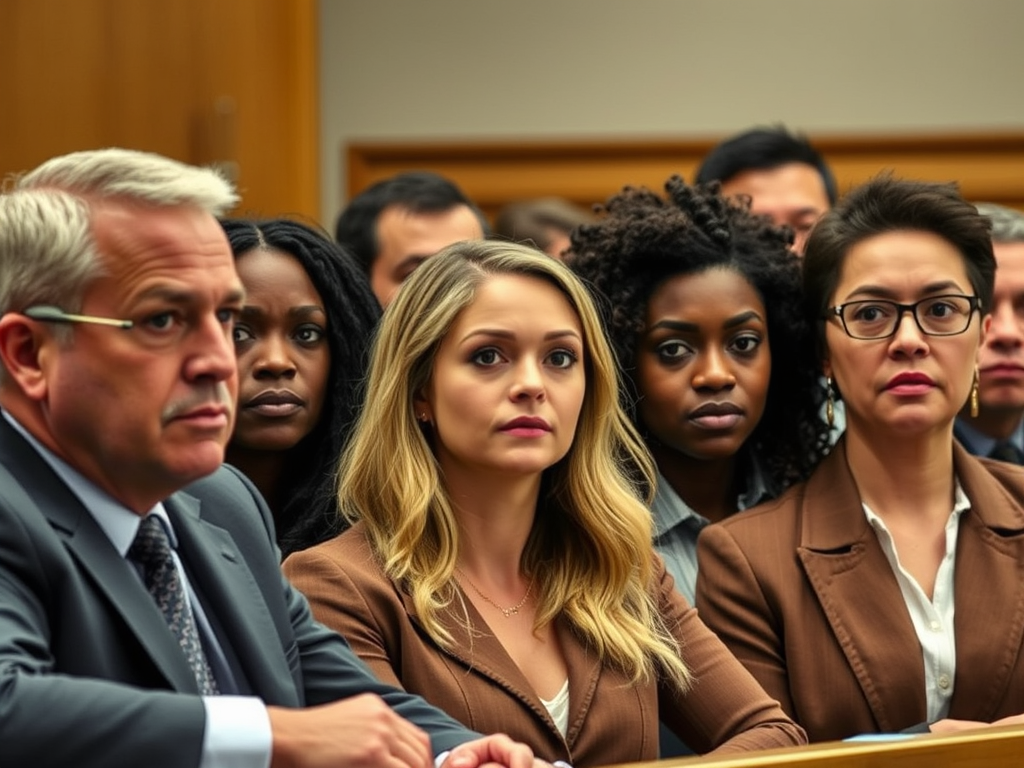
The Dangers of Eroding Jury Trials in Justice System

It always disappoints me how easily intelligent people can be convinced to surrender ancient liberties to the State.

We saw it several years back in the ‘Simon Says’ world of the Covid lockdowns, when everyone had to jump to every Matt Hancock command.

“Put a mask on your face. Now clap your hands. And stand 6 ft apart. Do it when the Simon says and you will never be out.”

We’re seeing it again with David Lammy’s published proposals for the scrapping of jury trials save for the most serious charges of murder, manslaughter, rape and other public interest cases. But what is more worrying for me, from listening to phone-in programs, is the way people are beginning to buy into it. Not just retired police officers and prosecution barristers, who would be expected to support any proposal which would make their job easier because a prosecution would no longer have to explain it’s case and convince a panel of ordinary people. It also seems to rest on the premise that anyone who steals a mobile phone from a supermarket is already guilty and just playing the system by electing jury trial. The proposals also belittle the damage which any conviction involving dishonesty or violence can have on someone who’s trying to hold down a responsible job or career. It’s something which will stay with you for life.

When mention is made of the fact that more than 90% of criminal cases already start and end in the magistrate court, it must also be remembered that almost all of those cases involve guilty pleas, in which the magistrates’ only role is to assess the seriousness of the offence and an mitigating factors before determining sentence. Remember also that, unlike jurors, magistrates are not picked at random from amongst our communities but are people who put themselves forward for selection. They are not like you and I. It attracts a certain type of person.

One thing which I’ve always regretted is the whittling away of public involvement in our justice system, first in civil cases leading to the last defamation jury trials and now extending to judge only criminal trials. I don’t trust them. Nor should you.