career, interview, job; career; money; raise; pay; increase, jobs, Law, Uncategorized

Your First Job: Key Tips for Young Job Seekers

With more than a million young people in the UK not in employment, education or training (NEETS), getting your first paid job has never been more difficult. But hasn’t getting your first permanent paid job always been difficult? When you have nothing to offer but a few paper qualifications and your enthusiasm? Yes – but it’s never been as difficult is it is today. We start by explaining the reasons for this sad state of affairs before looking at what you can do about it. Here are the reasons:

  • The modern trend of referring to our 16 and 17-year-olds as ‘children’ to be mollycoddled. Mixing them in with 11-year-olds. Banning under 16s from social media instead of making them streetwise. And then wondering why they act stupid. I was 14 years old when I bought my first packet of Players No 6 from a cigarette machine in a fish and chip shop. Just to look ‘big’. But it never did me any harm and I gave up smoking 5 years later. In other cultures it is different. Elsewhere in the world young people are not held back. They are encouraged to ‘grow up’, take on the family responsibilities and contribute. Maybe we can learn something.
  • Language illiteracy. The fact that learning foreign languages is not prioritized in the UK. Instead we expect everyone else in the world to accommodate us. The one thing I remember about learning French at secondary school was that I never actually met anyone who was French. In fact you were more likely to be taught by the woodwork teacher. Has anything improved since? I don’t think so.
  • The regulating away of the Saturday job. Forget paper rounds. No one gets their papers delivered anymore. It was the Saturday job which for many young people provided the gateway to paid employment. Unpaid work experience or internship is no substitute for a wage packet. The fact is that there are now many administrative hurdles for any business thinking about taking on a Saturday worker. If a person is under the age of 16, application has to be made to the local authority for a child employment permit, otherwise employers and public liability insurance might be invalidated. Young people require supervision at the till if they are serving restricted items like alcohol or cigarettes or lottery tickets. For most employers it is just not worth a hassle. Recruiting a Saturday person now requires more than just a 20-minute interview and a gut feeling
  • When you apply for your first ‘proper’ job, you are asking a prospective employer to take a ‘punt’. Because you have nothing to offer but a few paper qualifications and your enthusiasm. But the stakes for a prospective employer are much higher when everyone has day-one ‘rights’.

So what can you do to improve your prospects of getting that first job? Here are some tips:

  • To apply for a job vacancy, you first have to know about it. So you register with agencies. Look around to see what his advertised. Speak to people. But don’t get scammed, If someone asked you to send payment up front or to provide your bank details, you know it is a scam. Or if it is just too good to be true? Like becoming a crypto millionaire.
  • Don’t use AI to write your CV. Chances are it will filch from someone else’s CV. And you want a prospective employer to know about you and not your computer. So it’s got to be original and interesting and packed with examples which only you can talk about. Even using AI to check your spelling or grammar can be dangerous as it will default to American English. So maybe best to refer to an old-fashioned dictionary.
  • The likability factor. No one is going to offer you a job unless they like you. And first impressions count. So you throw away that hoodie and cover up those tattoos. Take a genuine interest in the job which is offered and find out as much as you can about it in advance so that you have something to talk about if you are called for interview. Buy a copy of Dale Carnegie’s ‘How to Win Friends and Influence People’ and read it. Likability can be learned. It’s the basic stuff like taking an interest in people and the world around you; taking the trouble to remember somebody’s name; treating everyone you deal with as ‘important’, even if they are sweeping the streets. Not breaking eye contact to look at your mobile phone.
  • Be presentable. The good news is that it is not expensive to look smart. So go to Primark or order off Amazon. Nobody is going to look at the label.
  • Think about learning another language. Because it will give you work-mobility. If you can speak some of the biggest languages, you can work anywhere in the world. Yes I know it’s difficult. Even though there are excellent programs like Duolingo. Problem is, it’s a solo activity. Everything is online. When you really need someone to practice with.
  • Polish up your communication skills both written and face to face. Remember that most of our communication is non-verbal. Hence the importance of eye contact. Don’t – don’t – don’t look at your phone when you are being interviewed. Switch it off and keep it in your pocket. Even if you don’t like football or cricket, at least listen to the sports news, because you need it for the ‘small talk’. Talking about sport is not going to upset anyone. One of the best ways to improve communication skills is practice. So join your local Toastmasters Club.

In the final part of this post, I’m going to introduce you to the world’s most exciting profession. Here it is

business, career, culture, emotional intelligence, Uncategorized

Embrace Networking Opportunities: Lessons from a London Summer Party

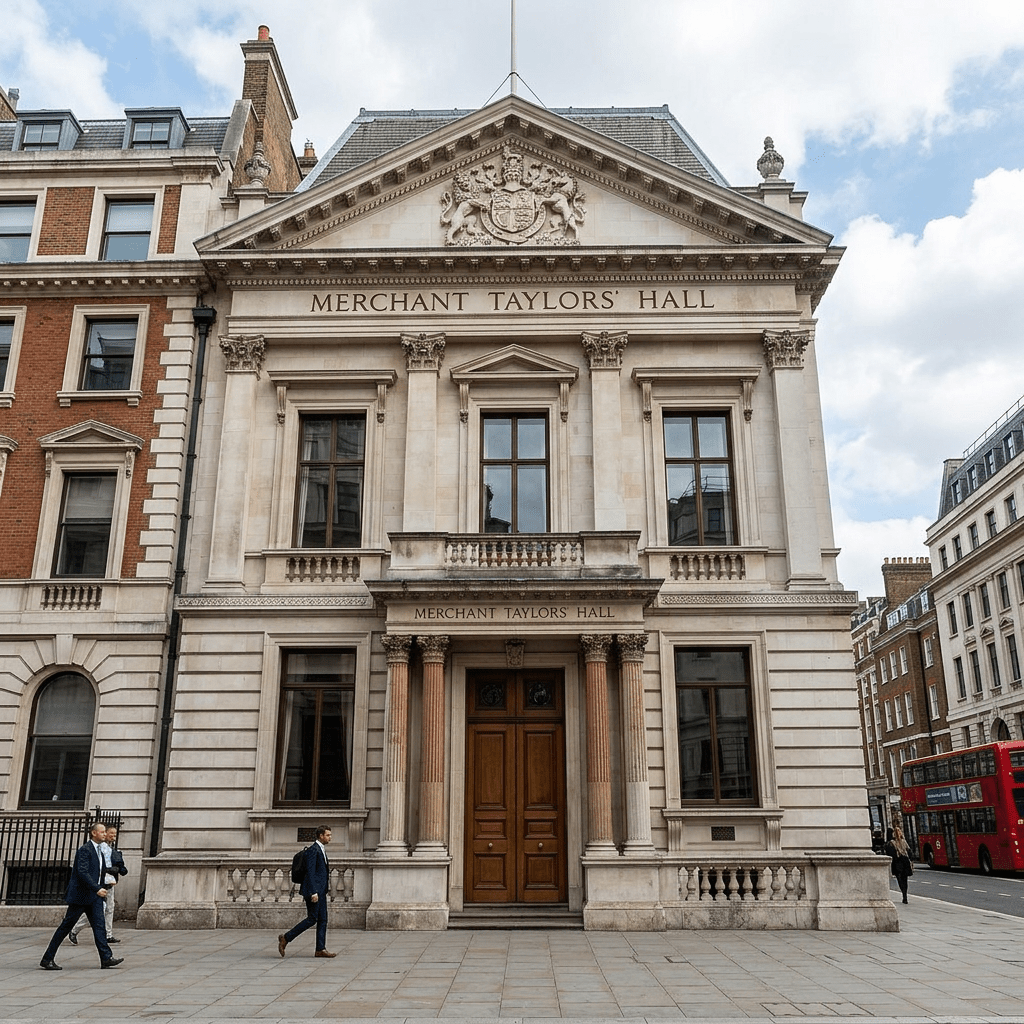
Yesterday I had a lovely evening at a summer party at Merchant Taylors’ Hall courtesy of the barristers at Francis Taylor Building. The weather and the vibes couldn’t have been better.

I walked through the open doors the building, not knowing a soul. When I went to collect my name badge i asked if I could glance through the attendance list, all 10 pages of it, just to see if there were any names I recognized. I noticed some firms, including Avison Young, with whom we do business. But my aging eyesight meant that the name badges attendees wore on their lapels were of little use to me. At least not without invading their personal space. But having taken my drink, it only took me about 15 minutes to find somebody I did know. A barrister with whom I had worked many years ago on a couple of planning inquiries and whom I had met a few weeks earlier at another conference organised by the Ecclesiastical Law Society and who introduced me to a retired judge-turned-mediator – who in turn introduced me to other guests including a lady member of the City Corporation with whom we spoke about Smithfield Market. Later on someone shouted out my name, even though I couldn’t remember who they were. But it was someone I used to work with and we quickly got talking and he introduced me to other lawyer acquaintances. So what do I take from all this?

Never refuse an invitation because you are worried that you might not know anyone else who is attending. Because that is what networking is about. And as my late mother once said, “If you refuse an invitation, you might never be invited again”. So be gracious. Always accept courtesy when it is offered.

A very long time ago I attended a free networking course at the Law Society Legal Services Exhibition at Olympia. I went along with Allison, a former work colleague. The course was free because it was promotional. But that didn’t matter. Because I took away a lot. And I bought the book. Like me, the course promoter, was a big fan of the late Dale Carnegie and his book, “How to Win Friends and Influence People”. So what are my networking tips:

  • Get in the habit of accepting invitations when they are offered. If you are not there you can’t network.
  • Take a genuine interest in the people and the world around you so that you have something to talk about. That is always an issue for me because in our house, sport is always a ‘turn-off’.
  • If you don’t get to speak to anybody it doesn’t matter. Just enjoy the vibe. Say hello to the catering staff.
  • Remember that you’re not trying to sell anything. Only yourself.
  • Take the trouble to remember someone’s name. Just in case you meet them again.
  • Stick to the small talk. You’re not trying to make a point. And never criticize or complain.
  • Don’t hand out business cards unless somebody specifically asks for one.
  • Don’t try to work the room. Shaking hands with everyone is not going to get you anywhere.
  • Be sensitive to body language. All conversations have a natural end. You will know when it’s time to move on.
Uncategorized

Share Tips from a Micro-Investor – November 2025

Photo by KoolShooters on Pexels.com

Ceres Power Holdings is my star performer for November 2025. A rise in the share price of more than 100% in just over 2 months. Even Rolls-Royce can’t beat that. Which gives me a dilemma. Do I cash in part of my shareholding to lock in the profit? Or do I hold my nerve? Just like playing Blackjack. Another card please! But I’ve got a hunch that it’s gone as high as it’s going to go. So I’d better cash in 50% and play the rest. It’s a mistake I made with Rolls-Royce when their shares hit 200%, and I cashed in 50% of my holding and played the rest. If I’d held my nerve, I might have got 100% of 650%. Because that’s how high Rolls Royce shares have flown. But I’m not complaining.

I’ve never understood why so many people get addicted to online gambling. Playing the stock market is so much more fun. Even when I’m gambling with small change. When Bloomsbury Publishing’s share price increased 100%, I cashed in 50% of my holding. I’m glad I did. After that the share price began to tumble and I sold the rest of my holding a couple of weeks later. I also had lucky escapes with Cineworld and Boohoo

Three months ago I’d never even heard of Ceres Power Holdings, until I was looking for some renewable energy companies in which to invest. I certainly haven’t seen it being tipped anywhere.

At a time when so many major UK pharmaceuticals are planning to upsticks and move their operations to the United States, it is also refreshing to see that some companies are still listing on the London Stock Market. The three new listings are Shawbrook Bank; Beauty Tech and Princes Group. What attracts me about Shawbrook is that it is a bank with a focus on small business finance. And what can I say about Princes Group? Except that I just love a tuna sandwich. So far I have been unsuccessful in my attempts to buy shares in these new listings through my share ISA. But that may only be because those shares are so new. I’ll keep trying.

.

Uncategorized

Navigating Share ISA: Tips for Tiny Investors

Photo by Antonio Jamal Roberson on Pexels.com

I hesitate to use the phrase ‘small investor’. ‘Tiny’ would be better. Even miniscule. I trade out of my share ISA. So what am I telling you?

Always rely on your own research and professional judgement. Don’t be led by what someone else is telling you. Magazines like ‘Investors Chronicle’, are great for generating ideas for someone coming to it new. But remember that as soon as IC recommends a share, its price will shoot up. So take a step back and wait a few weeks before making that decision. Some of the online recommendations always seem to me to be over optimistic, as if they want to pull you in.

I opened up my share Isa about a year before covid. When that struck, my account dipped £5,000 overnight. So did everybody else’s. I wondered whether it might be a great time to buy. But every time I bought a share, thinking that it was already at rock bottom, it would go down a little further. But eventually things picked up, as it did for all of us.

I also try to be an ethical investor. I always try to invest in companies which manufacture in the UK. I also look for geopolitical changes to guide me towards companies in which to invest. Following the recent America and India trade deals, I looked at the whiskey Industries, whom I think are likely to most benefit. Even though I’m not a whiskey drinker. At the moment there’s a lot of news about weight loss drugs and how demand is outstripping supply. So far the only talk is about demands on the NHS. But I guess that it won’t be long before some of the pharmaceutical companies will be launching their own over-the-counter equivalents. So I want to get in there. I wanted to invest in the American company, Eli Lilly, which is a leader in the field, but my Isa platform wouldn’t let me. So I guess that I’m going to have to settle for AstraZeneca.

I’ve also started to look at companies who manufacture renewable energy euipment in the UK. I found a few and have invested.

For me, the most important indicator of a share’s performance is the official graph. As long as the line keeps going up, I will hang in there. But as soon as it begins to plateau, I will think about what I need to do. Maybe it’s time to cash in part of that shareholding and keep running the rest of the shares in that company. When I’m investing in a new share, I try to start with a few hundred pounds to see how it works out. Then, if the value increases, this gambler will shove some more money on the table. Hope this is helpful.

society

Why We Should Enjoy Hot Weather: A UK Perspective

Photo by KoolShooters on Pexels.com

I never understand why today it is fashionable to see hot sunny weather as a problem instead of something to be celebrated. As a child going up in the UK, we never had weather like this. Yes, we might get a few sunny days. Rarely above 75°. But mostly, English weather was dreary dreary dreary. Rarely a winter went by with at least one heavy snowfall during January or February, lasting several weeks. Another winter feature was the fog, which made driving conditions difficult. A new phrase was coined, ‘motorway madness’ to describe the vehicle pile ups which occurred when drivers would insist on driving at speed through heavy fog, following the tail-lights of the vehicle in front. In those days, if you wanted hot sunshine, you had to pay for it by buying a package holiday to Spain.

I remember driving through London at the end of 1978 after heavy snowfall and in freezing temperatures.

Because it happened in the days between Christmas and New Year, no-one was prepared to get out of bed to grit the roads. That was a journey I’d never want to repeat. We passed so many smashed up cars.

Things had already begun to change with the long hot Indian summer of 1976 when we had an invasion of giant red ladybirds which would bite you. Anyone remember that? Then in September 2003, the Mercury hit 100° for the first time in living memory in the UK. Wouldn’t someone living in the mini ice age of 17th century Britain have envied that?

Of course a warmer climate in the UK means that adjustments have to be made. I think we are still too much of an ‘ indoor society’, when we should be getting out and enjoying the sunshine, like they do in other parts of the world. It’s why I like to take my computer outside and do my work instead of sitting in a stuffy box room. I’ve never believed in air conditioning. It has never made sense to me for someone to spend money burning energy to keep us in a freezer. How is that good for the planet? If I need to be inside, I’d much rather have a big wooden ceiling fan chug chug chugging overhead

Processing…
Success! You're on the list.