society

Why We Should Enjoy Hot Weather: A UK Perspective

Photo by KoolShooters on Pexels.com

I never understand why today it is fashionable to see hot sunny weather as a problem instead of something to be celebrated. As a child going up in the UK, we never had weather like this. Yes, we might get a few sunny days. Rarely above 75°. But mostly, English weather was dreary dreary dreary. Rarely a winter went by with at least one heavy snowfall during January or February, lasting several weeks. Another winter feature was the fog, which made driving conditions difficult. A new phrase was coined, ‘motorway madness’ to describe the vehicle pile ups which occurred when drivers would insist on driving at speed through heavy fog, following the tail-lights of the vehicle in front. In those days, if you wanted hot sunshine, you had to pay for it by buying a package holiday to Spain.

I remember driving through London at the end of 1978 after heavy snowfall and in freezing temperatures.

Because it happened in the days between Christmas and New Year, no-one was prepared to get out of bed to grit the roads. That was a journey I’d never want to repeat. We passed so many smashed up cars.

Things had already begun to change with the long hot Indian summer of 1976 when we had an invasion of giant red ladybirds which would bite you. Anyone remember that? Then in September 2003, the Mercury hit 100° for the first time in living memory in the UK. Wouldn’t someone living in the mini ice age of 17th century Britain have envied that?

Of course a warmer climate in the UK means that adjustments have to be made. I think we are still too much of an ‘ indoor society’, when we should be getting out and enjoying the sunshine, like they do in other parts of the world. It’s why I like to take my computer outside and do my work instead of sitting in a stuffy box room. I’ve never believed in air conditioning. It has never made sense to me for someone to spend money burning energy to keep us in a freezer. How is that good for the planet? If I need to be inside, I’d much rather have a big wooden ceiling fan chug chug chugging overhead

Processing…
Success! You're on the list.

business, politics, protest, society, Uncategorized

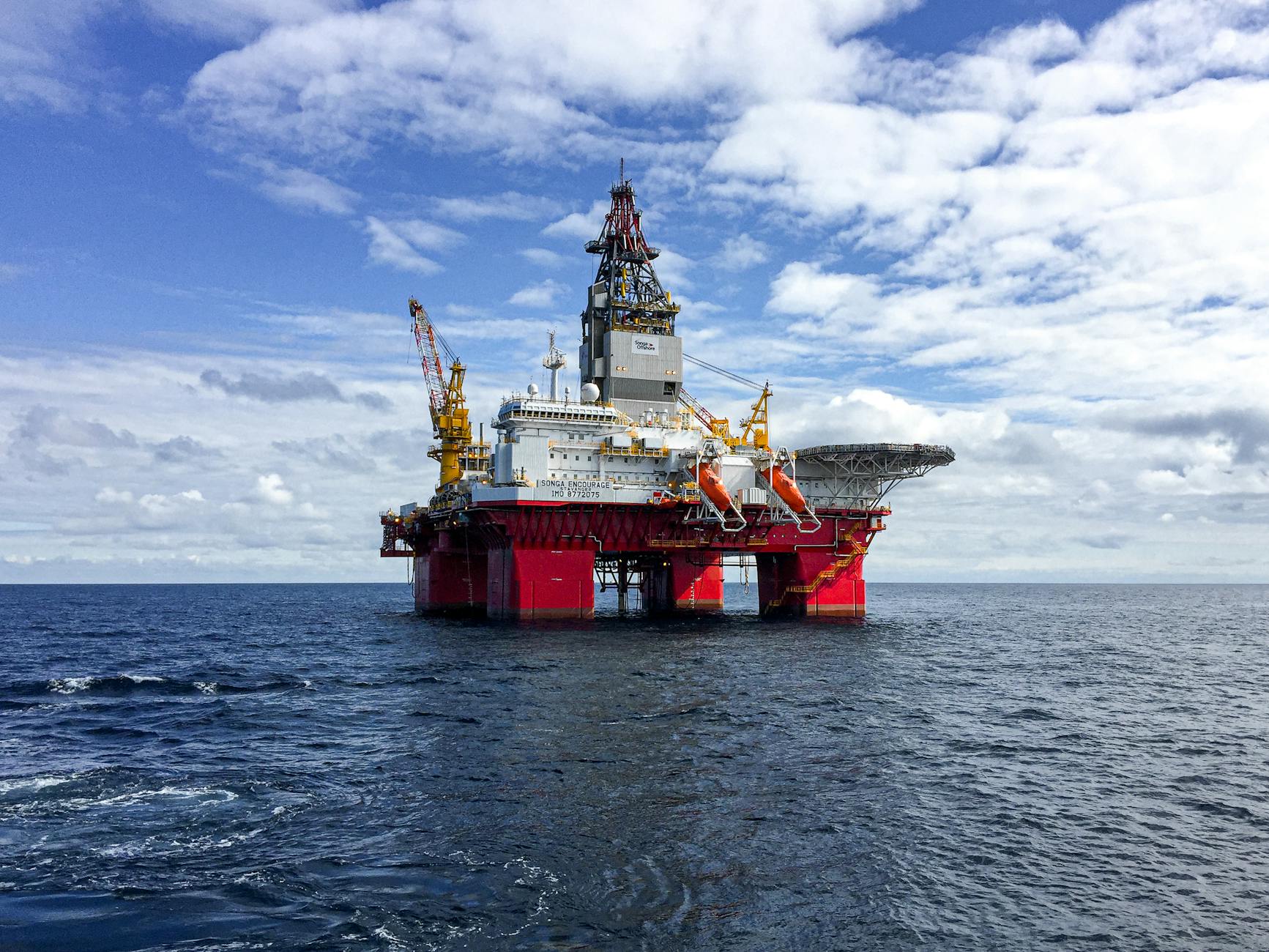
Economic Impact of Opposing UK Fossil Fuel Extraction

Photo by Jan-Rune Smenes Reite on Pexels.com

My heart always sinks when I see news footage of hobby eco-protesters standing outside a court building, waving placards, and celebrating the stalling of yet another commercial project. This time It was the Rosebank oil exploration project, off Shetland, in which Shell had invested £800 million and involved one of the largest undeveloped oil and gas fields in the UK continental shelf, containing an estimated 300 million barrels. And why do our most senior judiciary seem to think it is their mission to wave their green credentials to tease out the tiniest administrative flaw in the regulatory approval process, to send everything back to the drawing board? Who appoints these people? It follows hot on the heels of another court judgment crushing implementation of proposals to open Britain’s first new coal mine at Whitehaven, for more than 30 years. In each case, the judicial mantra was the same. “That the proposals failed to adequately assess the greenhouse gas emissions tied to burning fossil fuels.” And we know that with a government energy minister so opposed to fossil fuel extraction, that none of these projects are ever likely to happen. But haven’t these eminent legal brains slightly missed the point?

Yes – we know that burning fossil fuels causes climate change. Which is why we need to put in place viable alternatives .But neither the Rosebank nor the Whitehaven projects were about burning fossil fuels. They were about extracting fossil fuels so that we don’t have to import them from abroad. Either way. fossil fuels will still be burnt, because at the moment we have nothing else. And of course those projects would have also created thousands of well-paid jobs. So what is the point they are making? And it is entirely appropriate for me to refer to these eco-protesters as hobbyists, as none of them would have suffered direct personal detriment as a result of either of these projects. It is all about the big abstract ‘we’. And what message does it send to the outside world? A Britain which is so up itself that it is prepared to cut off its nose to spite its commercial face. Who would want to invest in us? The next big battle is going to be about the proposed third runway at Heathrow Airport. Even if it goes ahead, I’m not sure that I will still be around when it is completed. But that’s no reason not to support it.

I really blame the last conservative government for this farce. They had 14 years to drive these projects through. But instead they preferred to spend their time posturing about Brexit and their precious Rwanda scheme, as everything else around them fell apart. And they were a government which was in hock to the NIMBY lobby, which is why the cost of HS2 ballooned almost to the point of cancellation.

When it comes to the third Heathrow runway, I’m with Rachel Reeves. I know she’s had a bad press, but I’m convinced that she’s trying to do her best to grow the British economy. Again, so different from the last lot, the ‘party of business’. But even now, opposition to the third runway is cranking into gear, not least from London Mayor Sadiq Khan, who has promised court proceedings to try to stall the project.

Spending my money to fight a court case against his own parliamentary party? What is that all about? And he hasn’t even consulted me. A case of public money fighting public money. How wasteful. But that is Britain today.

business, culture, London, society

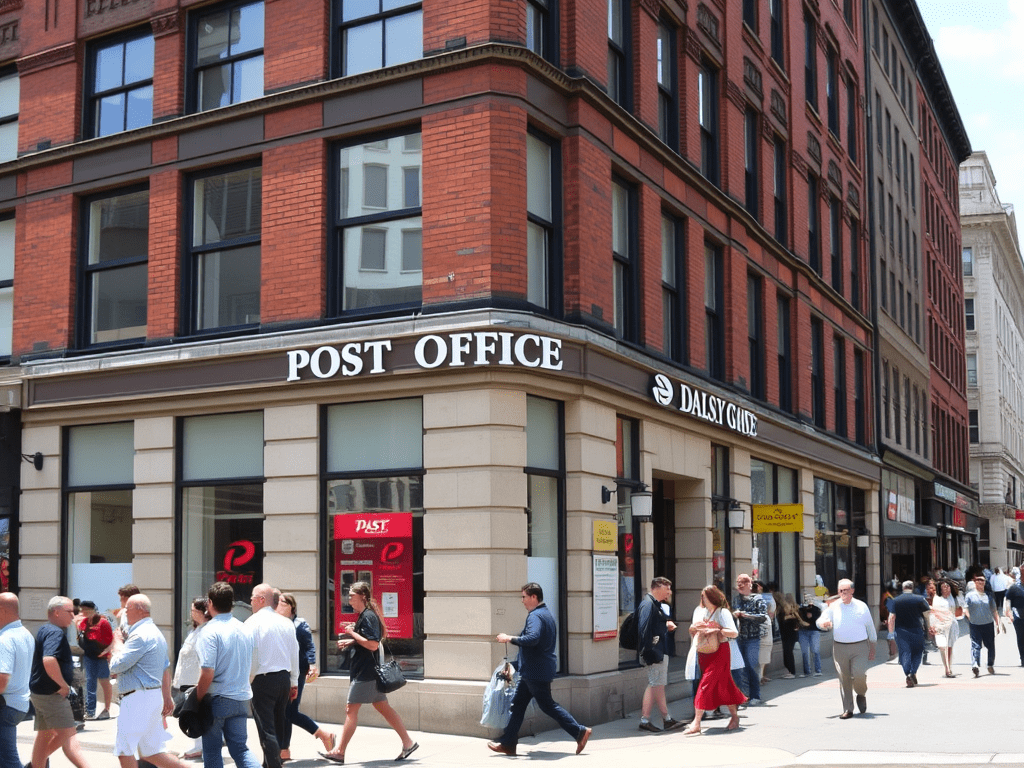
Post Office Blues

Earlier this week I took delivery of a letter-scale. It joins my laser printer as well as my scanner; computer monitor; headphones; wired mouse and keyboard. I bought it because I just can’t be bothered to stand in line at our local sub post office behind a long queue of people spilling out of the door and only one person serving. It’s never used to be like that. There were always at least two people behind the counter and the queue moved quickly. Not anymore. And I also read in the news of plans by the post office to close its remaining crown post offices in city centres

I had a letter to post. It was not valuable. It did not require a signature. But it was bulky because it contained a book. So I went to a couple of local sub post offices because I wanted to hand it over the counter and pay the correct postage. In the end, I gave up. So it sat on the shelf for a week whilst I decided what to do with it. Anyway, the scale arrived and I was able to calculate the postage myself and put on the required number of stamps and drop it into the nearest pillar box. Job done.

I had thought about trying the post office’s advertised door-collection service. But I didn’t fancy waiting indoors until the postman arrived. Though maybe I’ll try using it if I have a recorded delivery letter to post.

The long and short of it is that I won’t be going to my local post office anytime soon. In fact, if things carry on as they are, I’m sure that the next official announcement will be the closure of the remaining local sub post offices.

Like everything else in the UK, it’s all gone down the pan. And after the scapegoating Horizon computer scandal, who would want to be a sub postmaster?

career, culture, jobs, medical, mens health, relationships, self improvement, society

Signs of Getting Old

Photo by Andrea Piacquadio on Pexels.com
  1. When every time you make eye-contact with someone, they offer you their seat.
  2. When you celebrate every birthday with another tablet.
  3. When you eat less but put on weight. Like the 70’s rock band who decided to reform, looking like they’d just walked off a building site.

Things to Do When you are getting old.

  1. Make a will. It goes without saying.
  2. Make that extra effort to keep in touch with friends and family – especially the younger generation.
  3. Make a Living Will or Advance Direction, so you are in control of your own destiny, when it’s time to say goodbye.

Things not to do.

If you love your job and are at the top of your game, whatever you do, don’t retire, even if you’ve reached state pension age. Yes – take your company pension. You’ve worked for it and paid in to it. But don’t let it stop you working. And you don’t have to. Go freelance if you need to. You may also discover that your earning potential has never been higher. Because you will be getting your pension – PLUS – what you get working. And if you are past state retirement age, you won’t be paying any NI. What a great tax-break that is! So let someone else walk up and down a golf-course or kill time on a bowling green.

Brexit, business, culture, history, Law, politics, society

Erasing 1000 Years of History

Erasing 1000 years of history

One of the things I’ve noticed in the past couple of years is the appearance of cans of Carlsberg; Guinness and some other beers and lagers, which have been repackaged in larger pint-sized containers.  So when you pour it out, it will reach the top of your glass.  Just as if you were buying it draught.

What makes it legal in the UK to sell beer in pint-size cans is the fact that the 568ml equivalent is also displayed on the can.  Just as a McDonalds quarter pounder doesn’t define its weight but is a trademark.  A McDonalds quarter pounder’s actual legal weight in the UK is a minimum of 113.4 grammes uncooked.  But for me, it will always be quarter pounder.

So why is it that when I buy a 454 gramme jar of strawberry jam, I am not allowed to call it a pound of jam?  It is never labelled as such, even though for all practical purposes, 454 grammes is a pound of jam  The welcome exception is MacKay’s 12-ounce (340 gramme) jars of jam and marmalade, which are labelled in this way.  So why can’t other manufacturers label in the same way?  Selling items in imperial units is not illegal provided that you label the stuff correctly.

The fact Is, that pint cans have never been part of the British tradition because, before metrication, off-sales of beer were in brown pint or quart bottles.  The only notable canned beer which existed before metrication was the Watney’s Party 7 (and the smaller Party 4), which was sold in large cans which you could never open.  And when you did manage to pierce the heavy-duty aluminium, the gaseous contents sprayed everywhere.  From the 1970s onwards, most canned beers were sold in the horrible 440ml size, which doesn’t appear to convert to anything and which continues to be the standard size for most canned beers sold in the UK.  Why 440 ml?

Currently, it is only the British Weights and Measures Association (which appears closely aligned to Brexit and Farage’s Reform Party) which is fighting to preserve use of imperial units and which is fighting a rearguard action against mandated metrication.  But you don’t have to be an ardent Brexiteer or Faragist to regret the erasure of 1000 years of history.  And there is nothing anti-Europe about wanting to preserve our industrial heritage.  And the problem with rearguard actions is that they always fail, unless they buy time for something else to intervene.

Where imperial measurements still reign supreme, are in those parts of the world economy which have been traditionally dominated by the United States.  And no mandated-metrication is ever going to change that. Which is why we buy 15-inch pizzas and eat 15-ounce steaks.  Why we buy our McDonalds Quarter Pounders.  Why we fly at 30,000 feet.  Why heavyweight boxers still weigh themselves in pounds.  And why you might buy a 56-inch TV for your living room.