

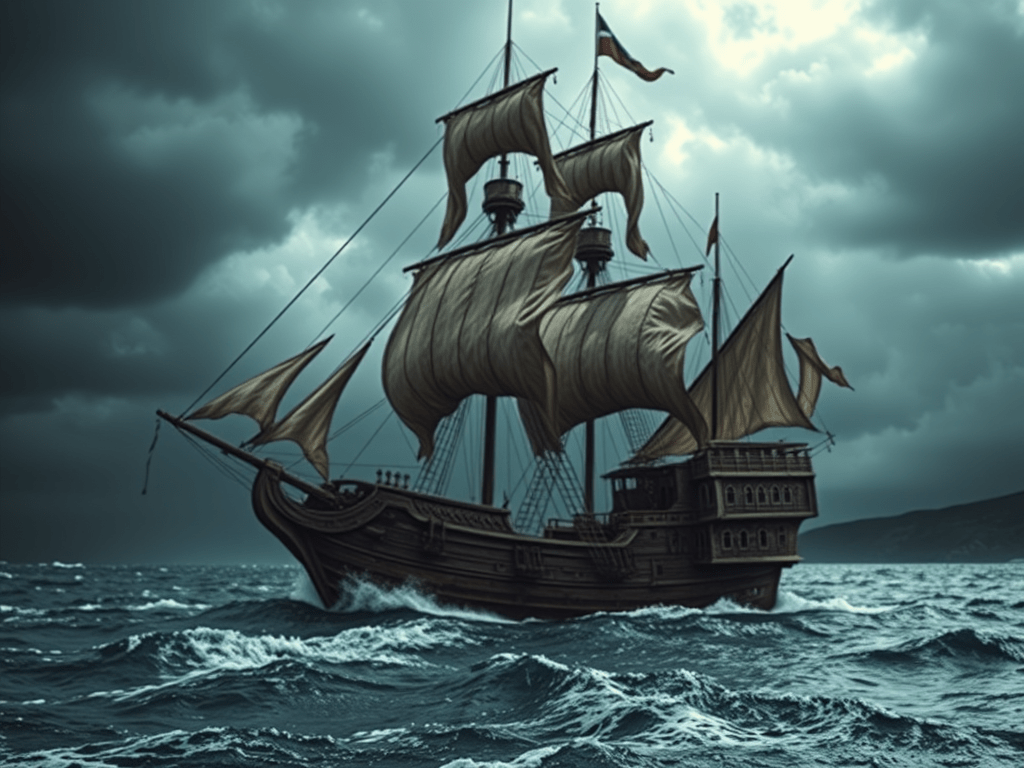
Even as a child, I would not have read Harry Potter. It’s just that I was not into wizards and magic spells. But give me Pirates! And that’s something else! It’s also why I watched all of the Pirates of the Caribbean films over the Christmas and New Year period. But did you know that each of those films had their roots in fact? I’ll prove it to you.
As a child I would lay in bed reading Edward Dingle’s ‘Sinbad’s Book of Pirates’, which was written in 1936 and had been given to me as a hand me down.
I’ve never been a pirate and wouldn’t be qualified to write a pirate book. Dingle was qualified because before becoming an author he had spent 22 years at sea and had survived five shipwrecks. In 1893, Dingle joined the salvage schooner Black Pearl to look for sunken treasure. They found the sunken wreck and strong box but we’re unable to move it. Strong gales then blew the ship away. A return voyage was wrecked near St Paul’s Island Australia. The crew survived but the Black Pearl was lost. They survived by eating rabbit, goat and fish before they were rescued. Eventually they did find treasure in another shipwreck. Does his story sound familiar?
Was it a coincidence that the name Black Pearl was used in Walt Disney’s first 2003 ‘Pirates of the Caribbean: the Curse of the Black Pearl’?
For me, the best pirate film was the 2011 ‘On Stranger Tides’ which again featured real historical characters and ships. The lead character in that film was Edward Teach, the famous Blackbeard and his ship, Queen Ann’s Revenge. Teach lived from 1680 to 1718 and operated around the West Indies and Britain’s then North American colonies.The Blackbeard name derived from his awesome appearance.So what about the mermaids?
Did mermaids actually exist? All we know, is that throughout most of human history, sailors believed in them. Mermaids were unlucky Omen. So what is it that I’m trying to say? That everything you write has to have an element of authenticity, Even if it’s fantasy fiction. It’s all about the research. About getting it right.
Postscript: in a moment of madness I went on to the Amazon site and ordered a used copy of Dingle’s 1936 book. It was as I’d remembered it. Almost word for word. And guess what? It is the World’s only surviving copy
 BRUCE AND HOLLY