housing, Law, property, real estate, Uncategorized

Protect Yourself Against Cladding Replacement Costs

Rolling Update detailing changes to Fire Safety Law as regards high-rise residential buildings – Updated to April 2023 

Bruce&Holly

This rolling update focuses on:

The Leaseholder Deed of Certificate

The Landlord Certificate

Lease Extensions

Leaseholder Deeds of Certificate and Landlords’ Certificates are now key to the protections which Schedule 8 of the Building Safety Act 2022 offers to high-rise residential leaseholders against the costs of remediating defective cladding and other non-cladding related safety-issues.  The two documents make critical reading for any high-rise residential leaseholder, building-owner, conveyancer or managing agent.

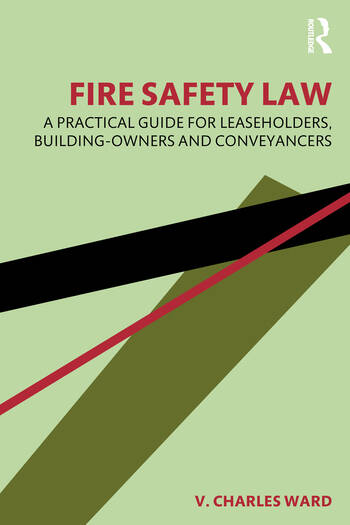
This rolling update is intended as a companion to Fire Safety Law: a Practical Guide for Leaseholders, Building-Owners and Conveyancers, which is published through Taylor and Francis and went on general release in September 2022.  The book itself explains the structure of modern fire-safety law with particular reference to multi-occupied residential buildings.  This rolling update will keep you alerted to new Fire-Safety legislation going forward. In this April 2023 update, we look specifically at how the protections apply (or may not apply) to statutory lease extensions under the Leasehold Reform, Housing and Urban Development Act 1993 as amended.

We start by offering you a 20% discount on the recommended retail price of the Fire Safety Law:: a Practical Guide for Leaseholders, Building-owners and Conveyancers together with a link to the Taylor and Francis website. When checking out, just type in discount code FLA22, which will enable you to purchase the book at a 20% discount.

https://www.routledge.com/Fire-Safety-Law-A-Practical-Guide-for-Leaseholders-Building-Owners-and/Ward/p/book/9781032271415

In this Update we focus firstly on the protections which Schedule 8 of the Building Safety Act 2022 now offers to high-rise residential leaseholders against the costs of replacing defective cladding as well as other non-cladding fire-risks, where those defects arose either during the initial construction of the building within the previous 30 years or during a later refurbishment of the building. Secondly, we look at why these statutory protections may be lost when a residential lease is extended under the 1993 Act.

Disclaimer

This bulletin contains no more than our interpretation of some very-complex legislation and associated government guidance which is intended to protect qualifying residential-leaseholders against the future cost of remediation work to replace defective-cladding as well as associated non-cladding-remediation.  We cannot guarantee that a court or tribunal would see things in exactly the same way.  It is therefore important that every conveyancer takes the time to read the legislation and relies on their own professional judgment as to the advice which they need to give their leaseholder or prospective-leaseholder client.  Likewise, if you are a leaseholder or someone responsible for the management of a multi-occupied residential building, it is important that you take your own independent legal advice before acting on any of the information contained within this bulletin.

Schedule 8 of the Building Safety Act 2022 (remediation-costs under qualifying leases etc)

Our starting point has to be Schedule 8 which sets out the framework of a new regime to protect certain residential leaseholders against the cost of removing and replacing defective cladding as well as in relation to any non-cladding fire-risk.  Sitting beneath Schedule 8 are the Building Safety (Leaseholder Protections)(England)Regulations 2022 and the Building Safety (Leaseholder Protections Information etc)(England)Regulations 2022, which, together, put in place the administrative processes needed to determine which a residential leaseholders qualify for such protection and which leaseholders enjoy more limited protection.

Schedule 8 does not give blanket protection to all high-rise residential leaseholders against the cost of remedial work either as regards defective cladding or other non-cladding related fire-risk.  The protection Schedule 8 offers is selective between different leaseholders either as regards the level of protection which is offered, or whether they are protected at all.  The owner of a ‘qualifying lease’ will be fully protected against the costs of replacing of defective cladding if the defect arose either during initial construction the building or during a later refurbishment.  But it will not cover a fire-risk resulting from later wear-and tear which was not attributable to any defective installation. 

For non-cladding fire-risk, whether a protected leaseholder enjoys either full or partial protection against the costs of remediation will depend on other factors, including whether the ground-landlord could in any way be regarded as responsible for the non-cladding defect or if the corporate-landlord is considered to have sufficient financial net-worth to shoulder the burden of such costs.  Even the owners of leases which are not qualifying leases may be exonerated from the liability to meet remediation costs in circumstances where responsibility for the original defect can properly be placed at the door of the ground landlord.

But even if the fire-risk remediation-costs cannot be placed at the door of the individual leaseholder, someone still has to pay for it.  And that someone will be the ground-landlord, if they are still around and are able to pay for it.  Even if that ground-landlord filed for insolvency, leaseholders can still look to any associated company which is still in existence, to take that liability.  But the ability to pass remediation liabilities back to a ground-landlord, may be of little help to those leaseholders who are collectively their own landlord through a freehold management company.  For those leaseholders, another source of funds to carry out the required remediation, will be a government grant.

The administrative complication for anyone collecting service charges in a high-rise residential building is to know which of the leases are ‘qualifying’ and which leases are not-qualifying, and to produce two sets of service charge demands for each class of leaseholder.  So who is a ‘qualifying leaseholder’ and how is the managing-agent to determine who qualifies for special-protection and who does not?  It is the Building Safety (Leaseholder Protections)(England) Regulations 2002 and the associated Information Regulations which now provide the documentary evidence to determine who is protected and who is not.

Who is a Qualifying leaseholder?

The reference date for determining which leases qualify for the fullest protection under Schedule 8 of the Building Safety Act 2022 is 14th February 2022. If a lease was a qualifying lease on 14 February, 2022, it will forevermore remain a qualifying lease carrying the fullest statutory protections against remediation-costs under Schedule 8 of the Building Safety Act 2022.  If a lease was not a qualifying lease on 14 February, 2022, it will never become a qualifying lease.  It also follows that no lease granted after 14 February, 2022 can ever qualify for the fullest protection under Schedule 8.

To have qualified for Schedule 8 protection on 14 February, 2022, the flat must have been situated within a block of flats at least 11 metres high or with at least five storeys (a ‘relevant builing’).  On 14 February, 2022, that flat must either have been in owner-occupation or, if not in owner-occupation, be owned by someone who did not own more than three UK properties in total.  So it means that some small buy-to-let landlords, including possibly corporate landlords, will qualify for protection if, on 14 February, 2022, if they did not own more than three UK Properties in total.

How does the owner of a qualifying lease evidence its protected status?

The only way in which the owner of a flat can properly evidence the fact that their lease was qualifying on 14 February 2022 is by completing and delivering to the ground-landlord a ‘Leaseholder Deed of Certificate’ in the form set out in the schedule to the Building Safety (Leaseholder ProtectionsInformation etc) England Regulations 2022, which took effect 21 July, 2022. 

As its name suggests, this document has to be executed as a deed.  That is to say, it must be signed by the leaseholder in the presence of a witness, who must also sign the document and provide their own full name and address.  A Leaseholder Deed of Certificate maybe provided by the leaseholder at any time but must be provided at the landlord’s request, failing which the landlord will be entitled to assume that the lease is not-qualifying.  In other words, the leaseholder may lose their Schedule 8 protection if they fail to provide a Deed of Certificate when asked to do so.

Providing a Leaseholder Deed of Certificate is, for all practical purposes, a self-certification exercise in which the leaseholder answers a number questions enabling the landlord to assess whether the particular lease qualifies or not.  The questions include: whether the flat was owner/occupied on 14 February, 2022; if the flat was not owner/occupied, whether the leaseholder owned more than two other properties in the UK; the price at which the flat was last sold before 14th February 2022; whether it is a shared ownership lease and, if so, the total share owned by the leaseholder as at 14 February, 2022.  As well as answering the questions, the leaseholder must also provide documentary evidence supporting the answers provided in the document.

A consequence of failing to provide a Deed of Certificate when asked to do so is that the ground-landlord may thereafter assume that the lease is not protected, when carrying out its service-charge calculations.  In other words, the protected status of the lease could be lost.  Where the leaseholder completing a Deed of Certificate was not the owner of the flat on 14 February, 2022 and does not already have the required information, it is then incumbent on the current leaseholder to make enquiries of the former leaseholder to establish the qualifying status of the flat on 14 February 2022.

It is also incumbent on the leaseholder to make enquiries to establish the price at which the flat was last sold before 14th February 2022 and, where it is possible to do so, to evidence that price from Land Registry records.  A Deed of Certificate is also an important title document as it is needed to establish the qualifying status of a flat as at 14 February, 2022.  It is therefore critical that a leaseholder keeps a copy of the certificate provided and that the landlord’s receipt of that certificate is acknowledged, for the record.  Anyone acting on the purchase of a flat post 14th February 2022 will need to ask for a copy of the Deed of Certificate evidencing the protected status of the lease, or not, as the case may be.

What protections does Qualifying Status offer?

  1. A qualifying leaseholder is protected completely against the costs of remediating flammable cladding in circumstances where the inherent defect resulted from the original construction of the building within the previous 30 years or later refurbishment or other works.
  2. Both qualifying and non-qualifying leaseholders are protected against the costs of remediating both cladding and non-cladding related fire-risk, in circumstances where the ground-landlord was also the developer of the building or carried out a later refurbishment or was responsible for commissioning that work within the previous 30 years.
  3. A qualifying leaseholder has complete protection against the costs of remediating both cladding and a non-cladding fire-risk in circumstances where on 14 February, 2022 the ground-landlord had a net-worth of more than two million pounds per relevant building.
  4. A qualifying leaseholder has limited protection against the cost of remediating non-cladding safety-defects in circumstances where the ground-landlord’s net-worth per relevant building on 14 February, 2022 was less than two million pounds.  In those circumstances, each qualifying residential leaseholder can be required to contribute a capped amount of £15,000 in Greater London and £10,000 elsewhere.  That cap is set at Zero for properties worth less than £325,000 in London or £175,000 elsewhere.  For properties worth more than one million pounds, the cap is £50,000.  If the property is worth over two million pounds, the cap is £100,000.  There are also special rules for apportioning liabilities in shared ownership properties. In all cases payment of the capped costs can be spread over 10 years.

The Landlord Certificate

If it is the leaseholder’s Deed of Certificate which evidences whether a lease is a qualifying lease for the purposes of Schedule 8 of the Building Safety Act 2022, it is the Landlord Certificate which contains the information needed to calculate how much the landlord is entitled to charge for building-safety works.  The ground-landlord must provide the leaseholder with a Landlord Certificate in any of the following circumstances:

  1. When they want to pass on any remediation-costs on to a leaseholder through the service-charge.
  2. Within four weeks from receiving notification from a leaseholder that their interest is to be sold.
  3. Within four weeks of the landlord becoming aware of a relevant defect which was not covered by a previous Landlord Certificate.
  4. Within four weeks of the leaseholder requesting a Landlord Certificate.

Information to be contained in the Landlord Certificate includes: the name and address of the relevant landlord on 14 February, 2022; the name and address of the current landlord; names and addresses of any superior relevant landlords; information requiring the net-worth of the landlord on 14 February, 2022; questions as to whether the landlord was in any way responsible for the relevant defect or the commissioning of that work; works previously taken to remedy relevant defects and amounts paid for that work.  The Landlord Certificate has to be set out in the pro forma attached to the Building Safety (Leaseholder Protection)(England)Regulations 2022.

Dealing with Default

Building-owners are under an obligation to make their buildings safe, including fixing historical building safety-defects.  The way for leaseholders to enforce that obligation is by applying to a First Tier Tribunal for a remediation order or a remediation contribution order.  Failure on the part of the ground-landlord to comply with either is enforceable through the county court.

Where the Building Safety Act protections do not apply

  1. To buildings of a height which is less than 11 metres or five storeys.
  2. Where the defect was not a result of the initial construction of a building or later adaption or refurbishment.
  3. To disrepair which is not related to building-safety (which is defined a either as a fire-risk or something affecting the stability of the building).

Statutory Extension Leases

The problem with statutory extension leases granted under the 1993 Act is that they take effect in law as a surrender and regrant of the original lease but on the extended terms. What this could means is that an extension lease completed after 14 February, 2022 might not qualify for the statutory protections which applied to the original lease granted before that reference date. The government has recognized this legal anomaly in updated advice “Qualifying Date, Qualifying Lease and Extent’ first published 21 July 2022 and updated 6 April 2023 in which it states in paragraph 8:

“Leaseholders should seek legal advice to make sure explicitly in these agreements that their protections are extended as part of their leases. It was intended to work like this and freeholders should make sure that lease extensions reflect this position.”

So ultimately, it’s a matter for negotiation. But what incentive is there for any ground-landlord to agree to extend statutory protections, which might not otherwise apply to the extended lease? Until there is a either a test case or the law is changed to make it more explicit, we will not know the answer.

To receive future updates from us either in relation to fire safety law or in relation to any other subject, please provide your e-mail address using the button below.  Thank you.

Processing…
Success! You're on the list.
business, Law, property, real estate

Fire Safety Law

My book, ‘Fire Safety Law’, which is published through Taylor and Francis, is about to go to print.  It will go live at the end of this month when it will be available for pre-order, and I will be able to provide you with a link and discount-code.  In the meantime, I am pleased to enclose a cover-pick.

The challenge in writing this book was to produce something which is sufficiently up to date, even when new legal developments come on stream almost on a daily basis.  Even during the final sub-editing and proofreading stages, new developments, such as the Fire Safety Regulations 2022 were being published.  In the end we got there: even though the fire safety law itself is still a work-in-progress, and will be so for many years to come, as the new law settles in.

The idea came out of the Part 1 Grenfell inquiry recommendations, which has since translated into legislation.

If you would like to be kept up to date with the publication timetable and discount-code for this book as well as information about future legal developments relating to fire safety, could you please complete the enclosed sign-up form.  As I’m still feeling my way with e-mail marketing, your sign-up, will also help me to know if the system is working.  And you can of course unsubscribe at any time.  Thank you.

V. Charles Ward

Processing…
Success! You're on the list.
Law, protest, society

If You Think You’ve Been Scammed

If you think you’ve been scammed. If you have received debt letters from a mobile phone company you’ve never even heard of. Don’t spend hours of your time breaking your head trying to convince someone in an off-shore call centre. They are not equipped to deal with it. Its off-script. Forget about e-mail. Instead write a FORMAL LETTER to their complaints department and post it recorded delivery. Yes-I know it’s a pain, standing in line in a post office with only one person serving. But is the only way to prove delivery. If you don’t get a reply or can’t find the complaints address, write a personal letter to their chief executive. Make it their problem. It’s all about creating a paper-trail. About covering yourself. About creating the evidence you need to take your complaint to the financial ombudsman if you can’t get a satisfactory response. They can’t ignore that. Just one other thing. Buy a copy of my book, ‘Get Paid’. It contains essential information for anyone being hassled by an unfair claim. It’ll show you what creditors can – and can’t do. Here is the link.

http://www.amazon.co.uk/Get-Paid-small-business-getting/dp/1727210204

business, career, Law, self improvement

WHAT MAKES A LAWYER?

Extracted from ‘Legal Profession: Is it for you?’. Because knowledge is the best Christmas present.
What are the personal qualities which every lawyer must have and why are they so important?

Integrity
So much of modern legal practice is based on trust. If banks could not trust lawyers to look after their money, the whole conveyancing system would grind to a halt. Nobody would be able to buy or sell property. Witnesses may lie but judges and magistrates have to be able to trust the word of the advocate who stands in front of them. Lawyers on opposite sides in a court case may each be fighting to win but at the same time they have to be able to trust each other to play by the rules. It is why integrity is right at the top of the list when the Solicitors’ Regulation Authority or any other professional body assesses somebody’s fitness to be a lawyer. If one lawyer cheats it can undermine public confidence in the entire profession. So what does integrity mean?
It means more than not being dishonest. It’s about strength of character. It’s about determination to do the right thing, whatever the personal cost. It means being prepared to refuse a client’s instructions rather than bow to pressure to do something which is not quite right. Easy enough! You might think. There are plenty of other clients. But suppose that the client who wants you to compromise your integrity is the one who provides 60% of your business? Not so easy.
The importance of integrity is recognized in the full title of a solicitor, which is ‘Solicitor of the Senior Courts of England and Wales.’ Until 2009 the title was ‘Solicitor of the Supreme Court’. But when the Judicial Committee of the House of Lords was itself renamed as the Supreme Court, a new title had to be found. It means that whatever a client may want, a solicitor’s first duty is to the administration of justice.

Being Streetwise
Being streetwise goes hand-in-hand with integrity. It is a dangerous world out there. You are now more likely to be mugged on the internet than in the street. And one of the biggest threats to the wallet is conveyancing fraud. It’s a billion dollar industry. The crime is one of impersonation.
Typically someone will dupe a lawyer into thinking that they own a property which belongs to someone else. It will usually be an empty property or one which is tenanted. They will have already found out from the Land Registry the name and address of the rightful owner and will pretend that they are that person. They may even produce forged papers to convince the lawyer that they are whom they pretend.
The lawyer then acts on the ‘sale’. The buyer’s lawyer assumes that the seller’s lawyer has carried out all due diligence checks as to the seller’s bona fides and pays the completion monies into the seller’s lawyer’s client account. Following completion of the sale, the seller’s lawyer passes on the completion money to the bogus seller, who disappears into the night. Then the rightful owner turns up and demands that the property is returned to them. So who picks up the £500,000 bill?
Well it can’t be the buyer’s lawyer because they are entitled to rely on you, as the Seller’s lawyer, to have made sure that you are acting for the rightful owner. They have done everything correctly. You’re the one who has been duped. So it is down to you – or your insurer – to make good the loss. Well that was the position until January 2017, when in the case of Dreamvar (UK) Limited v Mishcon de Reya, [2016] 3316 (Ch), the High Court ruled that buyer’s lawyers, Mishcons, were liable for a £1.1M ‘owner’ fraud, even though they had followed good conveyancing practice to the letter. It seems that the judge was more influenced by Mishcon’s generous insurance policy than the absence of error on their part. And there is another more sophisticated version of this fraud in which the fraudster impersonates an entire conveyancing firm. This fraud is about duping the buyer’s lawyer.
You as the buyer’s lawyer will be dealing with a reputable conveyancing firm which is acting for the seller. Or at least you think you are. Let’s call them Buggs Brown Solicitors (apologies to any real solicitors of that name). They correspond with you using a Buggs Brown letterhead. Only the letterhead is a forgery. The person you are dealing with isn’t a real Buggs Brown solicitor: they are a fraudster. Eventually you pay £500,000 to Buggs Brown’s client account to complete the ‘purchase’. Only it’s not a real solicitors’ client account. The money disappears off into to the ether. Title to the property is not transferred. The real Bugs Brown know nothing about the transaction. You have been conned.
A third fraud is where a fraudster hacks into lawyer’s computer system and sends out emails to clients and other solicitors pretending that the firm’s bank details have been changed. Money intended for the solicitors’ firm will then be transmitted instead by those clients to the fraudster’s account. It is why, to cover themselves, law firms now routinely warn clients and third parties not to be taken in by bogus emails notifying them of changed account details.
Being streetwise means being alert to the tiniest clues which indicate that something is not quite right. Maybe there is undue haste to complete the transaction. Maybe the client doesn’t want to see you and acts through intermediaries. Maybe there are spelling mistakes or use of strange terminology in correspondence and emails.
Being Meticulous
When preparing legal documentation, errors and omissions will be expensive. Imagine preparing a residential ground-lease which reserves an annual ground-rent of £10,000 instead the nominal £100 which the parties intended. If the client or the other party spots the mistake before signing the document, it can be corrected. But supposing they don’t? Supposing it is another ten years down the line when a new landlord looks at the lease and wonders why they are only receiving £100 from the leaseholder instead of the £10,000 which the lease states should be paid. There is a dispute.
There is also a tendency for modern judges to interpret the terms of a document literally even when those stated terms do not make any commercial sense. So if the lease says £10,000, then that is what the leaseholder is going to pay. It does not matter that no residential leaseholder in their right mind would agree to pay an annual £10,000 ground-rent for a flat which they own outright. Even if the typo is spotted in good time and corrected it still undermines client confidence in your competence to look after their interests. Someone who is paying you £200 an hour should not also have to act as your spellchecker.
Being a People Person
Like ex-president Barak Obama, you may exude an old world charm to which the rest of the world warms. For everyone else there’s Dale Carnegie’s ‘How to Win Friends and Influence People’. Yes – it’s true. Human relationships are a skill which can be learned. And Carnegie was its greatest teacher. The rules are pretty basic.
It’s about taking a genuine interest in people and the world around you. It’s about looking outwards. It is about taking the trouble to remember somebody’s name. It is about showing that you are pleased to see someone. It is about making that person feel valued. It is about understanding what is important to that person. It’s about never putting someone down. It’s about offering sincere appreciation to someone: never flattery. And of course you will never be tempted to openly criticize someone or complain. And it doesn’t matter whether that person is a sharp-suited businessman – or woman – or a prisoner in a cell. The rules are the same.
The law is a people-profession. It is all about how you interact with your clients; prospective clients; the lawyer on the other side; the judge or magistrate who is sitting in front of you – and all the people in between. Don’t like meeting people? Then go and be an accountant. Or drive a tube train. But don’t be a lawyer. Because meeting people is what the law is all about.
Being Passionate About Your Work
What all celebrity lawyers have in common is that they are passionate about their work. If they were not passionate, they would not have been able to develop the expertise and the niche on which their fame depends. If you are not passionate about the law and becoming a lawyer, don’t even take the first step. Find something else which you are passionate about. If you are not passionate about becoming a lawyer, you may not even make it through to qualification. And if you do, what sought of average legal career will you carve out for yourself? Passion is the inner motivator. If you are passionate about your career, you will master all of the other skills and qualities which make a good lawyer.
Being a Good Communicator
This goes hand-in-hand with being a people person. If you don’t have a genuine liking for people, how are you going to communicate with them?
Barristers have to be good on their feet and able to command a room. They have to be able to respond instantly to any situation. They can’t clam up. They must also be able to express themselves in writing and in the drafting of court documents. All solicitors must be able to communicate effectively on a one-to-one basis both verbally and in writing. If they can command a room as well: that is a bonus. But like people-skills: verbal and written communication are things which can be learned.
If you want to be confident on your feet, join a public speaking club. It is cheap and you will be practicing week-in week-out in a supportive environment. Toastmasters International are the brand-leader. It was founded more than a century ago in Bloomington, Illinois by Ralph Smedley. As Director of Education for the YMCA he saw the need for men to be able to speak, conduct meetings, plan programmes and work on committees. That was in 1905. It was almost seven decades later that Toastmasters officially opened up its meetings to women. The organisation now has branches in every City in the World. Until the late 1980s there was only one Toastmasters Club in London, which met fortnightly at the US Navy Building at Grosvenor Square. That Club still exists under the name ‘Grosvenor Square Toastmasters Club’ even though it now meets at the New Cavendish Club in Marble Arch. Dozens more Clubs have since joined it.
Every Toastmasters’ meeting begins with an impromptu ‘topics’ session in which members are picked out of the audience and given random topics on which to speak for up to two minutes. Its purpose is to help participants to ‘think-on-their-feet’. The second half of the evening starts with prepared speeches. All speeches, whether impromptu or prepared, receive constructive feedback and encouragement. Unfortunately there are as yet no clubs for written communication. Yes – every town has its Writers Circles. But those are for people who want to write stories not compose business correspondence.
Business writing is something which has to be learned solo. Forget the essays which you wrote at school. Business writing is different. It has its own rules which have more in common with the secrets of selling than artistic impression. It is about getting a point across: whether that point is to inform the reader about a state of affairs or to persuade the reader to take a course of action – such as paying an outstanding bill. Whilst there are books on business letter writing, it is a skill which can only be fully learned by doing. And of course by developing your own business style.
Start by looking at other peoples’ business correspondence. Try to spot the differences between something which is well-written and persuasive – and something which is incoherent and meaningless. It is said that, ‘the pen is mightier than the sword’. But not if the writing is littered with typos and an incoherent message. What the phrase means is that a well written letter carries power. It achieves results. Look for a piece of writing which is so good you want to frame it. Then break it down.
Look at the structure of the letter and how it gets its point across. How does the letter open? Why was it written? How does it convince the reader? And what is it asking the reader to do? Use it as your template. Then practice writing a similar letter of your own. Even though traditional letter writing has largely given way to text and email, the principles are the same. But email and text will never supplant letter-writing completely.
There is a time and a place for email and text. They are informal and chatty. But in the law there will always be a need for more formal written communication. Only a letter can provide that formality. Within the legal profession there are also conventions to be observed when lawyers communicate with other lawyers, third parties and with clients. They all require an element of detachment. Disregard those conventions and you may seen as ‘unprofessional’.
A client expects a lawyer to look and communicate like a lawyer. If they are paying £100 for a 45 minute consultation, they want to see somebody in a suit. They want to be addressed as Mr and Mrs Jones – not Bob and Angie. If they see somebody dressed in jeans and a tee-shirt they will feel cheated. When lawyers write to each other or to a third party, many still use the Royal ‘We’ as in, “We are acting for …..”. The ‘We’ may change to the more personal ‘I’ when the lawyer writes to their own client: but not always. But the form of communication which many lawyers find most difficult is networking.
Remember that for a lawyer in private practice, it is not just about doing the work. It also about getting the work. Why should a prospective client bring their work to you instead of the other solicitor who works down the road? It’s not just about you being the cheapest. If you are someone whom they already know and you can inspire them with confidence, they are more likely to instruct you.
One way of getting to know prospective business clients is through networking. It is about being able to walk into a large room full of strangers and engage with at least some of them. It requires all your skills as a people-person and as an effective communicator. You are not, ‘working the room’. You are not selling anything except yourself. But if can you can come away from the network event with at least one new business contact, it has been a success. But that is only the start. Contacts have to be followed up. Like people-skills, networking is something which can be learned. Practice it.
Being Able to Think Creatively
So much of the law is about process: whether it is following through a conveyancing transaction or defending a criminal prosecution. Anyone can follow process. But what makes a lawyer is the ability to see beyond the process and use it to get the result which your client needs – or as near as possible. Think about the problem questions which you did at school. Thinking creatively is about analysing a situation, knowing what questions to ask, identifying options and then being able to provide a client with a clear and reasoned recommendation as to what option would be right for them.
Being Able to Work at Speed
Suppose your normal hourly charge-out rate is £200. By quoting your client a flat fee of £1,000 for acting on the purchase of their house, you are gambling on the transaction not taking more than five hours of your time. If it takes ten hours of your time, your hourly charge-out is effectively reduced to £100 and your firm will bear the loss and you will not meet your yearly target.
It is why it is important to be able to turn work around quickly. No-one wants a slow lawyer. Not clients. They don’t want to have to keep chasing or to worry about the deal falling through. Not estate agents, whose commission structure means that they only get paid when the transaction completes.
Working quickly doesn’t mean cutting corners. What it does mean is an ability to organize your day efficiently and make best use of your time and the resources which are available to you. It means learning how to delegate, assuming that there is someone to whom you can delegate. Speed should also come with experience, once you have got a ‘feel’ for the process. It is why the most junior lawyer in the firm may not be the most economic for the client if it takes them twice as long to do the job.

business, housing, Law, politics, property, real estate

Why are first time buyers priced out of the UK housing market?

It’s because the market has become distorted. It’s not just about too many buyers chasing too few properties. It’s not about interest rates. It’s because first time buyers are not just competing against other first time buyers but also the buy-to-let market.   So why the distortion?

It’s because councils no longer own sufficient stock to meet their social housing responsibilities. Too much of it has been sold under right-to-buy and more than 40% is now owned by private landlords. So councils have to rent-back properties on their own estates to meet their statutory housing responsibilities and pay those inflated costs through the housing benefits system. It is that state-subsidised demand which has pushed private-sector rents and property prices through the roof. Everybody loses: the taxpayer; first time buyers; private renters. Everybody that is, except the private landlord. V. Charles Ward, Author, ‘Housing Regeneration: a Plan for Implementation’