Brexit, business, culture, history, Law, politics, society

Erasing 1000 Years of History

Erasing 1000 years of history

One of the things I’ve noticed in the past couple of years is the appearance of cans of Carlsberg; Guinness and some other beers and lagers, which have been repackaged in larger pint-sized containers.  So when you pour it out, it will reach the top of your glass.  Just as if you were buying it draught.

What makes it legal in the UK to sell beer in pint-size cans is the fact that the 568ml equivalent is also displayed on the can.  Just as a McDonalds quarter pounder doesn’t define its weight but is a trademark.  A McDonalds quarter pounder’s actual legal weight in the UK is a minimum of 113.4 grammes uncooked.  But for me, it will always be quarter pounder.

So why is it that when I buy a 454 gramme jar of strawberry jam, I am not allowed to call it a pound of jam?  It is never labelled as such, even though for all practical purposes, 454 grammes is a pound of jam  The welcome exception is MacKay’s 12-ounce (340 gramme) jars of jam and marmalade, which are labelled in this way.  So why can’t other manufacturers label in the same way?  Selling items in imperial units is not illegal provided that you label the stuff correctly.

The fact Is, that pint cans have never been part of the British tradition because, before metrication, off-sales of beer were in brown pint or quart bottles.  The only notable canned beer which existed before metrication was the Watney’s Party 7 (and the smaller Party 4), which was sold in large cans which you could never open.  And when you did manage to pierce the heavy-duty aluminium, the gaseous contents sprayed everywhere.  From the 1970s onwards, most canned beers were sold in the horrible 440ml size, which doesn’t appear to convert to anything and which continues to be the standard size for most canned beers sold in the UK.  Why 440 ml?

Currently, it is only the British Weights and Measures Association (which appears closely aligned to Brexit and Farage’s Reform Party) which is fighting to preserve use of imperial units and which is fighting a rearguard action against mandated metrication.  But you don’t have to be an ardent Brexiteer or Faragist to regret the erasure of 1000 years of history.  And there is nothing anti-Europe about wanting to preserve our industrial heritage.  And the problem with rearguard actions is that they always fail, unless they buy time for something else to intervene.

Where imperial measurements still reign supreme, are in those parts of the world economy which have been traditionally dominated by the United States.  And no mandated-metrication is ever going to change that. Which is why we buy 15-inch pizzas and eat 15-ounce steaks.  Why we buy our McDonalds Quarter Pounders.  Why we fly at 30,000 feet.  Why heavyweight boxers still weigh themselves in pounds.  And why you might buy a 56-inch TV for your living room.

abortion, culture, diversity, Ghosts, history, relationships, religion, sex, society, spirit, women

Do you believe in ghosts?

Don’t believe in ghosts? You will believe after you’ve met a real-life jinni. You will believe after you have been taken to a rooftop seance at an hour past midnight and seen a glass fly into the air and smash into the face of a sleeping child. You will believe when a young man, who was a champion swimmer, tells you how he was drowned in the waters of Hawkesbay and his body was washed towards the rocks at Sandspit. And all because it rained and he forgot the sadhu’s warning. You will believe!

history, Uncategorized

A Trip to the Gasworks

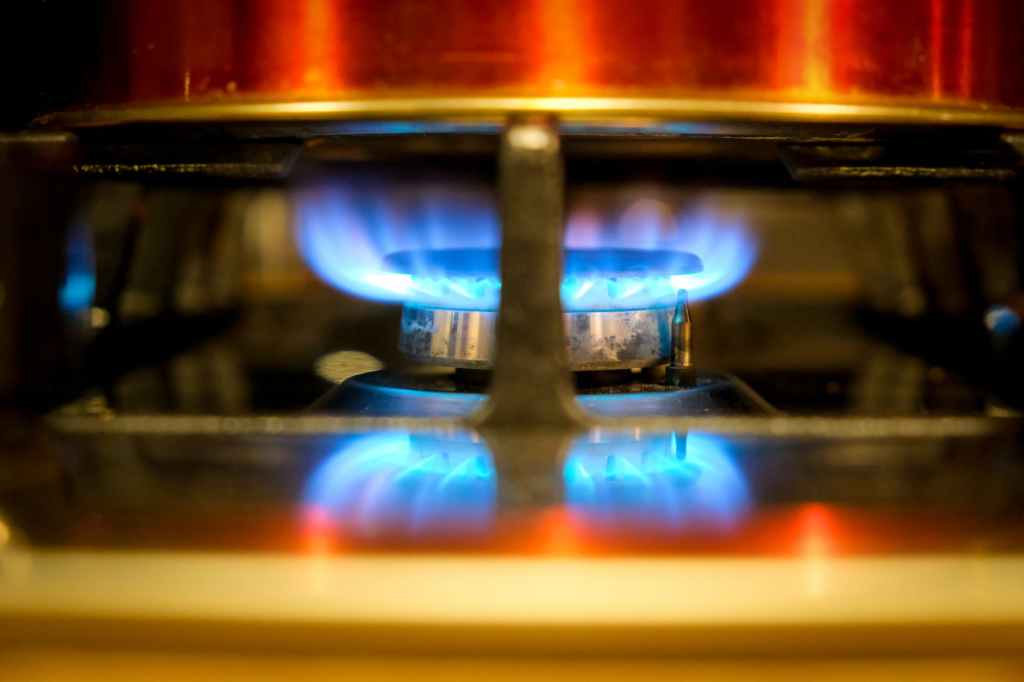
Back then we didn’t have natural gas.  Instead we made our own gas by chucking coal into a retort and cooking it.  The stuff which came off was deadly poisonous.  But we weren’t there to sniff it.  It powered our gas cookers.  No-one had gas central heating. It was all solid fuel.  At the beginning of every winter, grimy faced men would come round and deliver a ton of coal into the shed in our back garden.

There were no gas bills. It was all pre-pay.  When the money ran out so did the gas.  That was until  Mum  pushed half a crown into the gas-meter and re-lit the stove. A half crown was equivalent to 25 pence in new money.  It was enough to buy 20 cigarettes or half a gallon of petrol and keep the gas running for the next couple of days. People were also different. 

They were slimmer than most people are today.  There were no pot bellies. Because we walked everywhere.  Yes-we might take a bus or train if they were not on strike.  And they were always on strike.

One day I took a tour of our local gas works which was situated behind a big yellow wall fronting Southend Seafront.  Across the road and extending about 200 yards into the Thames Estuary was a short pier.  At the end of it were two small white steam-cranes.  We peered inside the one which was working, as it lifted coal from a barge and loaded it onto a wagon.  The driver said it was oil-fired.  The second crane, which sat silent, was coke fired.  We walked back along the pier and into the gasworks building.

Through the sweltering orange half-light, we saw bare-chested men shovelling coal in to the retorts.  Coal dust hung in the air.

Next was the pump house, where a massive rumbling steam engine drove gas along the network of pipes into our homes.

Within a year, the gasworks had closed. It was 1967.  The men were laid off.  Natural gas had arrived.  Other men came to our homes and converted our gas cookers to the new fuel.  Even then it all seemed to me too good to be true.  Cheap gas from the sea? What would happen when it all ran- out?  As it must run out at some time?  Would we then have to build new gasworks and go back to making town gas?  It’s the big unanswered question.  Within a couple of years the buildings themselves were demolished and all that remained were a couple of large gasometers and the remains of the pier.

If you would like to know more about our industrial heritage and the way we lived, please take a look at, ‘British Imperial and U.S.  Customary Units Explained’.  See the enclosed link. Thank you/