The issue reminds me of the horror comics I read as a child. In one story, a mega-computer, which filled a room, had just taken over the world but was defeated when a janitor accidentally pulled out the plug while she was trying to clean behind it. Another story depicted a future crime-free world in which a man was arrested and banished to an outer galaxy just for thinking about stealing a pile of money left on a table. How scary is that?
Rolling Update detailing changes to Fire Safety Law as regards high-rise residential buildings – Updated to April 2023
Bruce&Holly
This rolling update focuses on:
The Leaseholder Deed of Certificate
The Landlord Certificate
Lease Extensions
Leaseholder Deeds of Certificate and Landlords’ Certificates are now key to the protections which Schedule 8 of the Building Safety Act 2022 offers to high-rise residential leaseholders against the costs of remediating defective cladding and other non-cladding related safety-issues. The two documents make critical reading for any high-rise residential leaseholder, building-owner, conveyancer or managing agent.
This rolling update is intended as a companion to Fire Safety Law: a Practical Guide for Leaseholders, Building-Owners and Conveyancers, which is published through Taylor and Francis and went on general release in September 2022. The book itself explains the structure of modern fire-safety law with particular reference to multi-occupied residential buildings. This rolling update will keep you alerted to new Fire-Safety legislation going forward. In this April 2023 update, we look specifically at how the protections apply (or may not apply) to statutory lease extensions under the Leasehold Reform, Housing and Urban Development Act 1993 as amended.
We start by offering you a 20% discount on the recommended retail price of the Fire Safety Law:: a Practical Guide for Leaseholders, Building-owners and Conveyancers together with a link to the Taylor and Francis website. When checking out, just type in discount code FLA22, which will enable you to purchase the book at a 20% discount.
In this Update we focus firstly on the protections which Schedule 8 of the Building Safety Act 2022 now offers to high-rise residential leaseholders against the costs of replacing defective cladding as well as other non-cladding fire-risks, where those defects arose either during the initial construction of the building within the previous 30 years or during a later refurbishment of the building. Secondly, we look at why these statutory protections may be lost when a residential lease is extended under the 1993 Act.
Disclaimer
This bulletin contains no more than our interpretation of some very-complex legislation and associated government guidance which is intended to protect qualifying residential-leaseholders against the future cost of remediation work to replace defective-cladding as well as associated non-cladding-remediation. We cannot guarantee that a court or tribunal would see things in exactly the same way. It is therefore important that every conveyancer takes the time to read the legislation and relies on their own professional judgment as to the advice which they need to give their leaseholder or prospective-leaseholder client. Likewise, if you are a leaseholder or someone responsible for the management of a multi-occupied residential building, it is important that you take your own independent legal advice before acting on any of the information contained within this bulletin.
Schedule 8 of the Building Safety Act 2022 (remediation-costs under qualifying leases etc)
Our starting point has to be Schedule 8 which sets out the framework of a new regime to protect certain residential leaseholders against the cost of removing and replacing defective cladding as well as in relation to any non-cladding fire-risk. Sitting beneath Schedule 8 are the Building Safety (Leaseholder Protections)(England)Regulations 2022 and the Building Safety (Leaseholder Protections Information etc)(England)Regulations 2022, which, together, put in place the administrative processes needed to determine which a residential leaseholders qualify for such protection and which leaseholders enjoy more limited protection.
Schedule 8 does not give blanket protection to all high-rise residential leaseholders against the cost of remedial work either as regards defective cladding or other non-cladding related fire-risk. The protection Schedule 8 offers is selective between different leaseholders either as regards the level of protection which is offered, or whether they are protected at all. The owner of a ‘qualifying lease’ will be fully protected against the costs of replacing of defective cladding if the defect arose either during initial construction the building or during a later refurbishment. But it will not cover a fire-risk resulting from later wear-and tear which was not attributable to any defective installation.
For non-cladding fire-risk, whether a protected leaseholder enjoys either full or partial protection against the costs of remediation will depend on other factors, including whether the ground-landlord could in any way be regarded as responsible for the non-cladding defect or if the corporate-landlord is considered to have sufficient financial net-worth to shoulder the burden of such costs. Even the owners of leases which are not qualifying leases may be exonerated from the liability to meet remediation costs in circumstances where responsibility for the original defect can properly be placed at the door of the ground landlord.
But even if the fire-risk remediation-costs cannot be placed at the door of the individual leaseholder, someone still has to pay for it. And that someone will be the ground-landlord, if they are still around and are able to pay for it. Even if that ground-landlord filed for insolvency, leaseholders can still look to any associated company which is still in existence, to take that liability. But the ability to pass remediation liabilities back to a ground-landlord, may be of little help to those leaseholders who are collectively their own landlord through a freehold management company. For those leaseholders, another source of funds to carry out the required remediation, will be a government grant.
The administrative complication for anyone collecting service charges in a high-rise residential building is to know which of the leases are ‘qualifying’ and which leases are not-qualifying, and to produce two sets of service charge demands for each class of leaseholder. So who is a ‘qualifying leaseholder’ and how is the managing-agent to determine who qualifies for special-protection and who does not? It is the Building Safety (Leaseholder Protections)(England) Regulations 2002 and the associated Information Regulations which now provide the documentary evidence to determine who is protected and who is not.
Who is a Qualifying leaseholder?
The reference date for determining which leases qualify for the fullest protection under Schedule 8 of the Building Safety Act 2022 is 14th February 2022. If a lease was a qualifying lease on 14 February, 2022, it will forevermore remain a qualifying lease carrying the fullest statutory protections against remediation-costs under Schedule 8 of the Building Safety Act 2022. If a lease was not a qualifying lease on 14 February, 2022, it will never become a qualifying lease. It also follows that no lease granted after 14 February, 2022 can ever qualify for the fullest protection under Schedule 8.
To have qualified for Schedule 8 protection on 14 February, 2022, the flat must have been situated within a block of flats at least 11 metres high or with at least five storeys (a ‘relevant builing’). On 14 February, 2022, that flat must either have been in owner-occupation or, if not in owner-occupation, be owned by someone who did not own more than three UK properties in total. So it means that some small buy-to-let landlords, including possibly corporate landlords, will qualify for protection if, on 14 February, 2022, if they did not own more than three UK Properties in total.
How does the owner of a qualifying lease evidence its protected status?
The only way in which the owner of a flat can properly evidence the fact that their lease was qualifying on 14 February 2022 is by completing and delivering to the ground-landlord a ‘Leaseholder Deed of Certificate’ in the form set out in the schedule to the Building Safety (Leaseholder ProtectionsInformation etc) England Regulations 2022, which took effect 21 July, 2022.
As its name suggests, this document has to be executed as a deed. That is to say, it must be signed by the leaseholder in the presence of a witness, who must also sign the document and provide their own full name and address. A Leaseholder Deed of Certificate maybe provided by the leaseholder at any time but must be provided at the landlord’s request, failing which the landlord will be entitled to assume that the lease is not-qualifying. In other words, the leaseholder may lose their Schedule 8 protection if they fail to provide a Deed of Certificate when asked to do so.
Providing a Leaseholder Deed of Certificate is, for all practical purposes, a self-certification exercise in which the leaseholder answers a number questions enabling the landlord to assess whether the particular lease qualifies or not. The questions include: whether the flat was owner/occupied on 14 February, 2022; if the flat was not owner/occupied, whether the leaseholder owned more than two other properties in the UK; the price at which the flat was last sold before 14th February 2022; whether it is a shared ownership lease and, if so, the total share owned by the leaseholder as at 14 February, 2022. As well as answering the questions, the leaseholder must also provide documentary evidence supporting the answers provided in the document.
A consequence of failing to provide a Deed of Certificate when asked to do so is that the ground-landlord may thereafter assume that the lease is not protected, when carrying out its service-charge calculations. In other words, the protected status of the lease could be lost. Where the leaseholder completing a Deed of Certificate was not the owner of the flat on 14 February, 2022 and does not already have the required information, it is then incumbent on the current leaseholder to make enquiries of the former leaseholder to establish the qualifying status of the flat on 14 February 2022.
It is also incumbent on the leaseholder to make enquiries to establish the price at which the flat was last sold before 14th February 2022 and, where it is possible to do so, to evidence that price from Land Registry records. A Deed of Certificate is also an important title document as it is needed to establish the qualifying status of a flat as at 14 February, 2022. It is therefore critical that a leaseholder keeps a copy of the certificate provided and that the landlord’s receipt of that certificate is acknowledged, for the record. Anyone acting on the purchase of a flat post 14th February 2022 will need to ask for a copy of the Deed of Certificate evidencing the protected status of the lease, or not, as the case may be.
What protections does Qualifying Status offer?
A qualifying leaseholder is protected completely against the costs of remediating flammable cladding in circumstances where the inherent defect resulted from the original construction of the building within the previous 30 years or later refurbishment or other works.
Both qualifying and non-qualifying leaseholders are protected against the costs of remediating both cladding and non-cladding related fire-risk, in circumstances where the ground-landlord was also the developer of the building or carried out a later refurbishment or was responsible for commissioning that work within the previous 30 years.
A qualifying leaseholder has complete protection against the costs of remediating both cladding and a non-cladding fire-risk in circumstances where on 14 February, 2022 the ground-landlord had a net-worth of more than two million pounds per relevant building.
A qualifying leaseholder has limited protection against the cost of remediating non-cladding safety-defects in circumstances where the ground-landlord’s net-worth per relevant building on 14 February, 2022 was less than two million pounds. In those circumstances, each qualifying residential leaseholder can be required to contribute a capped amount of £15,000 in Greater London and £10,000 elsewhere. That cap is set at Zero for properties worth less than £325,000 in London or £175,000 elsewhere. For properties worth more than one million pounds, the cap is £50,000. If the property is worth over two million pounds, the cap is £100,000. There are also special rules for apportioning liabilities in shared ownership properties. In all cases payment of the capped costs can be spread over 10 years.
The Landlord Certificate
If it is the leaseholder’s Deed of Certificate which evidences whether a lease is a qualifying lease for the purposes of Schedule 8 of the Building Safety Act 2022, it is the Landlord Certificate which contains the information needed to calculate how much the landlord is entitled to charge for building-safety works. The ground-landlord must provide the leaseholder with a Landlord Certificate in any of the following circumstances:
When they want to pass on any remediation-costs on to a leaseholder through the service-charge.
Within four weeks from receiving notification from a leaseholder that their interest is to be sold.
Within four weeks of the landlord becoming aware of a relevant defect which was not covered by a previous Landlord Certificate.
Within four weeks of the leaseholder requesting a Landlord Certificate.
Information to be contained in the Landlord Certificate includes: the name and address of the relevant landlord on 14 February, 2022; the name and address of the current landlord; names and addresses of any superior relevant landlords; information requiring the net-worth of the landlord on 14 February, 2022; questions as to whether the landlord was in any way responsible for the relevant defect or the commissioning of that work; works previously taken to remedy relevant defects and amounts paid for that work. The Landlord Certificate has to be set out in the pro forma attached to the Building Safety (Leaseholder Protection)(England)Regulations 2022.
Dealing with Default
Building-owners are under an obligation to make their buildings safe, including fixing historical building safety-defects. The way for leaseholders to enforce that obligation is by applying to a First Tier Tribunal for a remediation order or a remediation contribution order. Failure on the part of the ground-landlord to comply with either is enforceable through the county court.
Where the Building Safety Act protections do not apply
To buildings of a height which is less than 11 metres or five storeys.
Where the defect was not a result of the initial construction of a building or later adaption or refurbishment.
To disrepair which is not related to building-safety (which is defined a either as a fire-risk or something affecting the stability of the building).
Statutory Extension Leases
The problem with statutory extension leases granted under the 1993 Act is that they take effect in law as a surrender and regrant of the original lease but on the extended terms. What this could means is that an extension lease completed after 14 February, 2022 might not qualify for the statutory protections which applied to the original lease granted before that reference date. The government has recognized this legal anomaly in updated advice “Qualifying Date, Qualifying Lease and Extent’ first published 21 July 2022 and updated 6 April 2023 in which it states in paragraph 8:
“Leaseholders should seek legal advice to make sure explicitly in these agreements that their protections are extended as part of their leases. It was intended to work like this and freeholders should make sure that lease extensions reflect this position.”
So ultimately, it’s a matter for negotiation. But what incentive is there for any ground-landlord to agree to extend statutory protections, which might not otherwise apply to the extended lease? Until there is a either a test case or the law is changed to make it more explicit, we will not know the answer.
To receive future updates from us either in relation to fire safety law or in relation to any other subject, please provide your e-mail address using the button below. Thank you.
Processing…
Success! You're on the list.
Whoops! There was an error and we couldn't process your subscription. Please reload the page and try again.
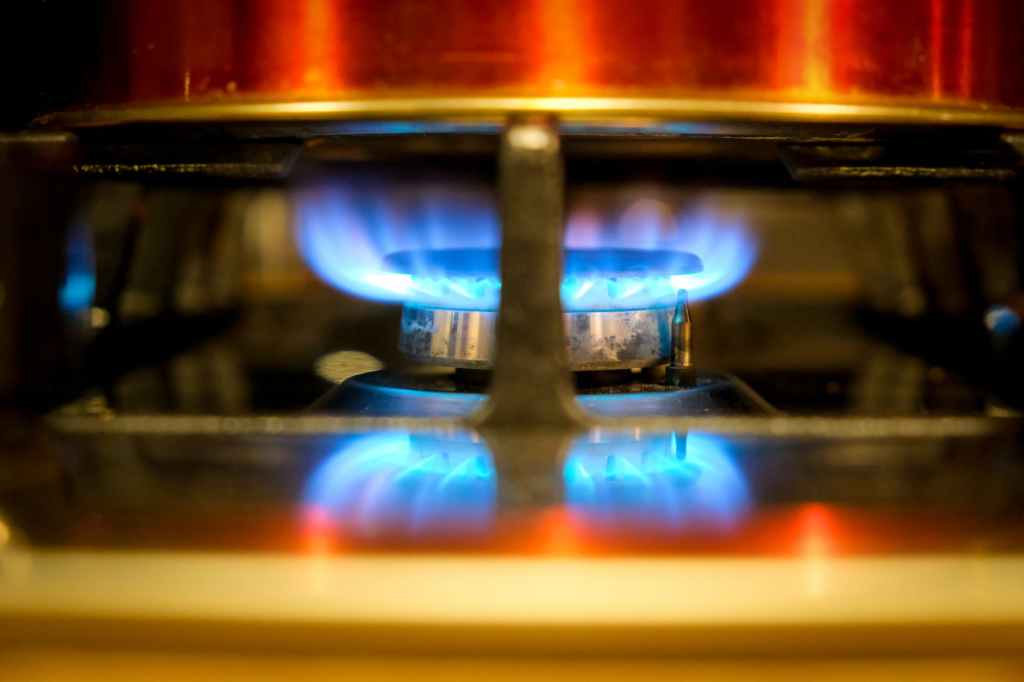
Back then we didn’t have natural gas. Instead we made our own gas by chucking coal into a retort and cooking it. The stuff which came off was deadly poisonous. But we weren’t there to sniff it. It powered our gas cookers. No-one had gas central heating. It was all solid fuel. At the beginning of every winter, grimy faced men would come round and deliver a ton of coal into the shed in our back garden.
There were no gas bills. It was all pre-pay. When the money ran out so did the gas. That was until Mum pushed half a crown into the gas-meter and re-lit the stove. A half crown was equivalent to 25 pence in new money. It was enough to buy 20 cigarettes or half a gallon of petrol and keep the gas running for the next couple of days. People were also different.
They were slimmer than most people are today. There were no pot bellies. Because we walked everywhere. Yes-we might take a bus or train if they were not on strike. And they were always on strike.
One day I took a tour of our local gas works which was situated behind a big yellow wall fronting Southend Seafront. Across the road and extending about 200 yards into the Thames Estuary was a short pier. At the end of it were two small white steam-cranes. We peered inside the one which was working, as it lifted coal from a barge and loaded it onto a wagon. The driver said it was oil-fired. The second crane, which sat silent, was coke fired. We walked back along the pier and into the gasworks building.
Through the sweltering orange half-light, we saw bare-chested men shovelling coal in to the retorts. Coal dust hung in the air.
Next was the pump house, where a massive rumbling steam engine drove gas along the network of pipes into our homes.
Within a year, the gasworks had closed. It was 1967. The men were laid off. Natural gas had arrived. Other men came to our homes and converted our gas cookers to the new fuel. Even then it all seemed to me too good to be true. Cheap gas from the sea? What would happen when it all ran- out? As it must run out at some time? Would we then have to build new gasworks and go back to making town gas? It’s the big unanswered question. Within a couple of years the buildings themselves were demolished and all that remained were a couple of large gasometers and the remains of the pier.
If you would like to know more about our industrial heritage and the way we lived, please take a look at, ‘British Imperial and U.S. Customary Units Explained’. See the enclosed link. Thank you/
As a ‘remainer’ and as someone who attended the ‘people’s vote’ march in London’s Hyde Park on Saturday 20 October 2018, I am an unlikely person to be writing a book about imperial weights and measures.
Whilst I welcomed the freedom of movement across international boundaries that Britain’s former membership of the EU offered, I was never so enthused about the mandating away of our traditional system of weights and measures. For me, it seemed so unnecessary. There is nothing ‘anti-Europe’ about feet and inches. Our historic system of weights and measures is just as much part of our heritage as the many languages, accents, dialects, and cultures which each of us encounters on a daily basis and which give colour to our lives. So why should its use be criminalised?
I also admit to being one of that small handful of people who actually welcome the government’s current consultation on allowing traditional measurements in the sale of loose goods. What is there to be frightened of? The proposal is harmless. No one is going to be forced to buy their petrol in gallons instead of litres. If you’ve heard of imperial measurements but have never been educated in their use, my book, ‘British Imperial and U.S. Customary Measurements Explained’, will tell you everything you need to know. Please see the enclosed link and check it out. It’s a tiny book at an even tinier price. It does not bang any drum. It is purely informative. And topical. And entertaining. And it’s packed with amazing facts and figures. Like the connection between a medieval King and how you buy your shoes today. So far as I’m aware, there is nothing else on the market quite like it. Enjoy! V. Charles ward.
Why is our glorious summer weather now seen as a problem instead of something to be celebrated? Tell that to someone who lived through the frozen winter of 1684 when the seas froze and livestock died in the fields. The climate has always changed. Think about the Great Ice Ages of pre-history or the medieval warm period when Britain basked in a tropical climate. How do our summers compare with that? We’re just lucky to be living in an upward curve. The biggest threat to the environment is the cutting down of the World’s rain forests. But no-one is doing anything about that. Why?






 BRUCE AND HOLLY